Passage Retrieval 101: Why AI Pulls Sentences, Not Whole Pages
How passage retrieval and query fan-out change which answers get found, and how to make your strongest sections stand on their own.
One of our clients had a pricing guide that I would have bet money on. Thorough, well-researched, ranking on page one for its main term. When we tested it against AI answers, it almost never got cited. The engines kept quoting a thinner competitor page instead, and my client’s team was understandably annoyed.
When we pulled the two pages apart, the reason was almost embarrassing. My client’s best answer to the most common question was there, but it was spread across three paragraphs that only made sense read in order: a setup, a “however,” and a payoff that referred back to “the second option” from earlier. The competitor answered the same question in one tight paragraph that stood on its own. In a passage-based retrieval workflow, only one of them offered an answer that made sense on its own.
Pages are how we write; passages are how machines read
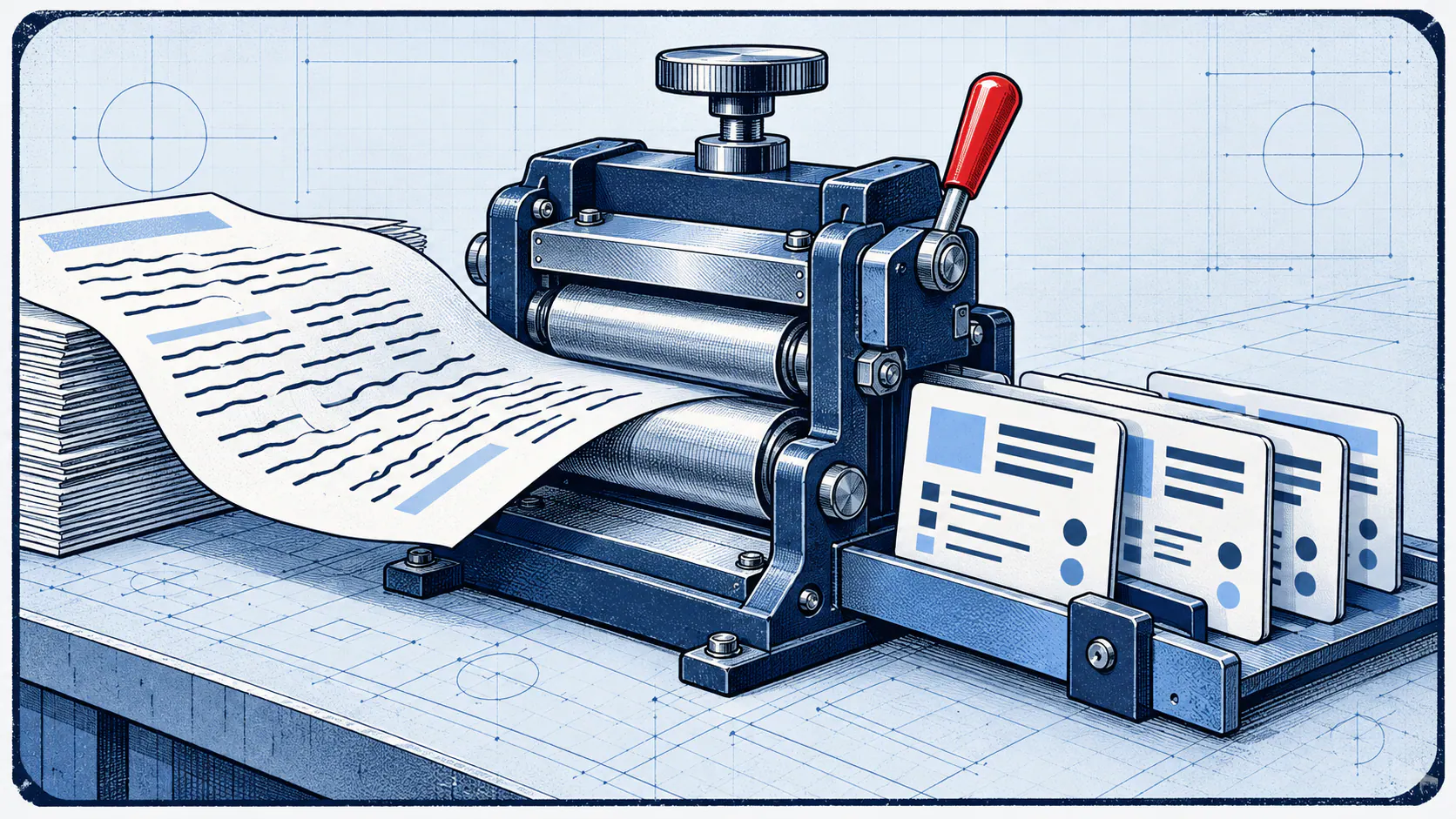
We publish pages because that’s how people navigate the web. But many systems that assemble AI answers also work at a finer grain. To match content to a question, they often break pages into smaller units, a process called chunking, and score those units for how well they answer what was asked.
Google has worked this way in traditional search for years. Its passage ranking system, announced in late 2020, lets Google evaluate an individual passage on a page as relevant to a query, even when the page as a whole is about something broader. AI answer systems can use retrieved passages as evidence for a response, often synthesizing or paraphrasing rather than quoting them verbatim.
How a passage gets chosen
Here’s a simplified version of what can happen when someone asks an AI system a question. In one common approach, the system retrieves passages from a collection of indexed pages, representing each passage in a way that captures its meaning, often as an embedding, a numerical fingerprint of what the text is about. It compares those fingerprints to the question and selects relevant evidence. This is the retrieval half of retrieval-augmented generation: find useful evidence first, then write the answer from it.
The key point for a marketing leader is how well this specific chunk of text addresses this specific question. Authority, overall quality, freshness, and other source signals can influence selection too. A useful standalone passage complements those signals rather than replacing them.
“A page can be useful overall and still offer few passages that make sense on their own.”
Query fan-out: one question becomes many
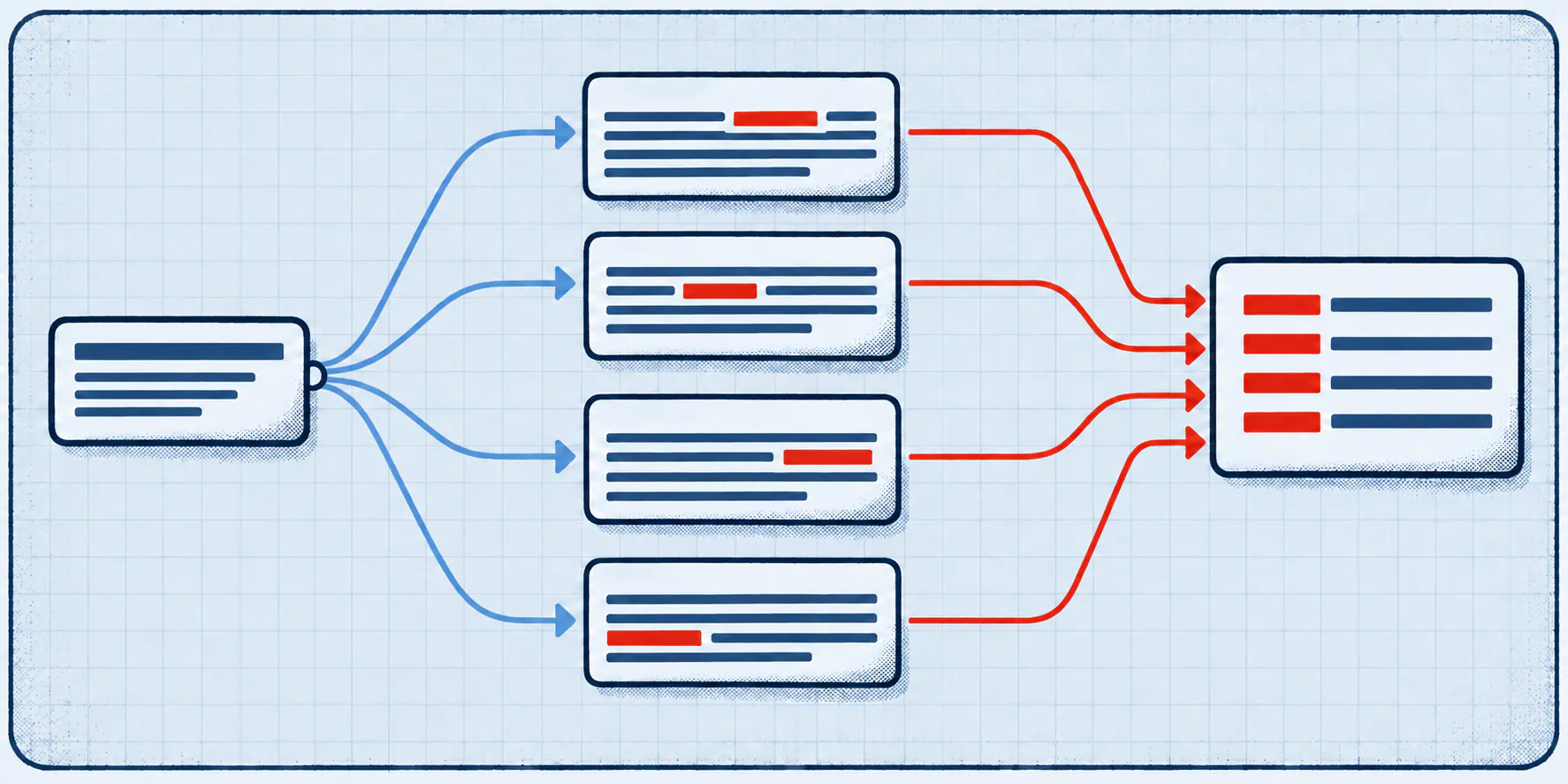
AI Mode adds another layer. Google describes it as using a technique called query fan-out: it can break a single question into multiple related sub-questions, run searches for each, and assemble the answer from what comes back. A buyer asking “what’s the best way to retrofit an aging pump system” may trigger behind-the-scenes searches about cost, downtime, compatibility, and vendor selection.
That changes the competition. Your page isn’t trying to answer one query; it’s competing across several sub-questions at once, passage by passage. A page with a clean, self-contained answer to each likely sub-question has several chances to be pulled in. A page that answers everything in one long, interdependent narrative has fewer clean pieces to offer, even if it’s the better read for a human.
Our AI Visibility Report shows exactly which pages are indexed and your site’s exact authority metrics.
What a passage that survives extraction looks like
The fastest way to see the difference is side by side. Here’s the same answer written two ways. The first depends on the paragraphs around it. The second carries everything it needs:
BEFORE — depends on context it no longer has once extracted:
"However, as mentioned above, this is usually the better choice for
older facilities. It typically costs less than the second option
and takes about half as long."

AFTER — stands on its own:
"For facilities with pump systems older than 15 years, a retrofit
is usually more cost-effective than full replacement. A typical
retrofit costs 40–60% less and takes about half as long to complete."(The figures in that example are illustrative, not industry benchmarks.)
What this means for how you structure content
You don’t need to rewrite your site in fragments, and you shouldn’t. Content still has to read well for people. But a few habits make your best passages survive extraction. Give each section one clear question, ideally stated in the heading. Put the direct answer in the first sentence or two under it, before the nuance. Name the subject explicitly instead of leaning on “it” or “this.” And put specific, checkable details, numbers, dates, named sources, inside the passage that makes the claim, not three paragraphs away.
This is exactly the discipline Answer Engine Optimization is built around, and it’s why we say a page can rank and still lose the answer. It also overlaps heavily with Generative Engine Optimization: a useful standalone passage can both support an answer and earn a citation, which we broke down in The Anatomy of an AI Citation.
Where to start
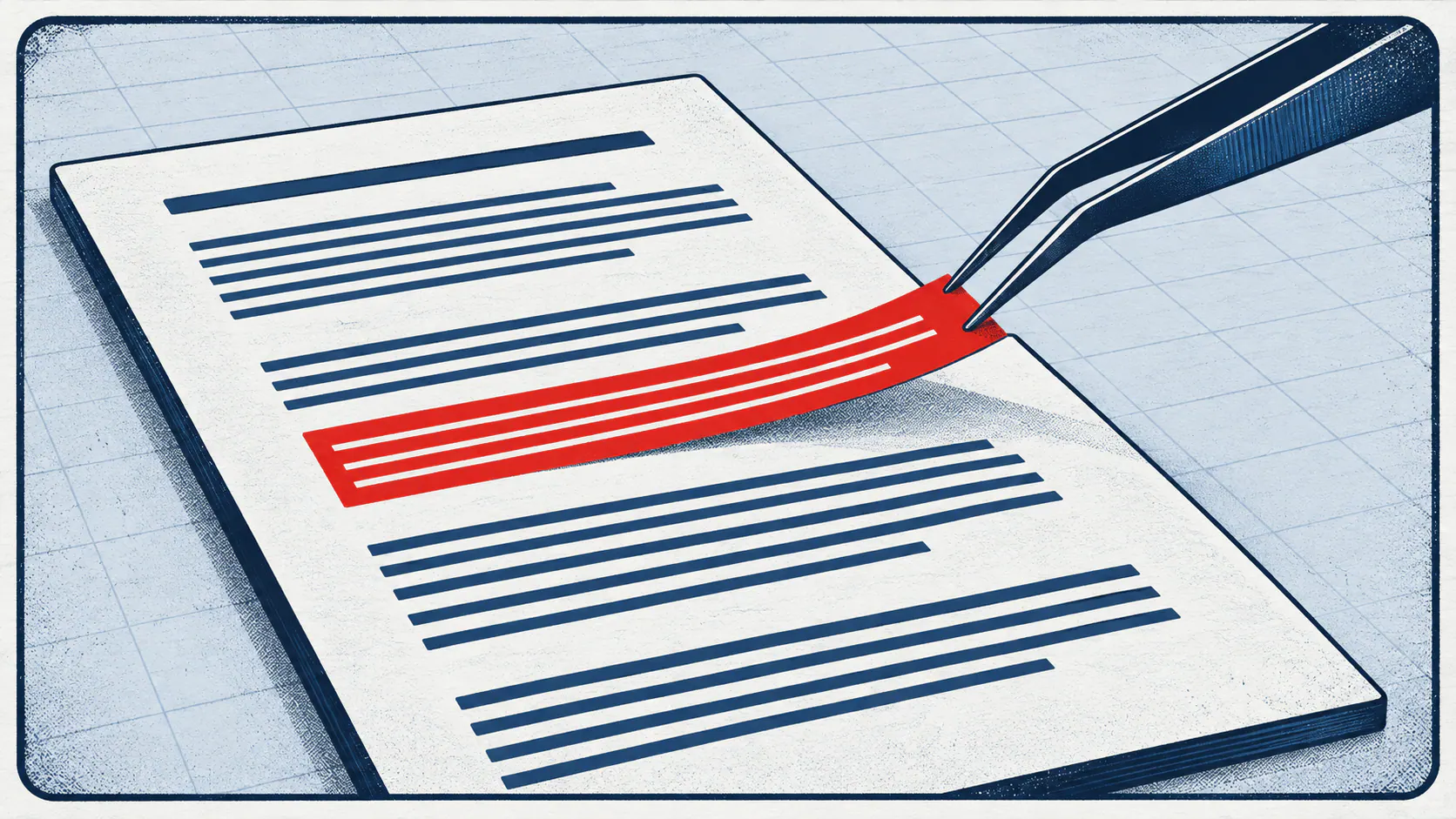
Pick the three pages that matter most commercially and read each section as if it had been torn out of the page and handed to a stranger. Does it say what it’s about? Does it answer something on its own? Would it still be accurate without the paragraph above it? Wherever the answer is no, rewrite that section’s opening.
If you want to see which of your passages AI engines are actually pulling, and which competitor passages they’re choosing instead, that’s what the content-structure and visibility testing in our AI Readiness Audit measures. When you’re ready to turn the theory into a repeatable writing pattern, the next post in this series lays out the method step by step.
Frequently asked questions
What is passage retrieval?
It's how many search and AI systems find relevant evidence at the level of individual passages. Pages can be split into chunks and scored against a question alongside other source signals. Selected passages may inform page ranking or support an AI answer, which can synthesize or paraphrase rather than quote them directly.
Why would a page that ranks well not get cited by AI?
Ranking and citation rely on overlapping signals, but a page can be relevant overall while none of its individual passages answers a question cleanly on its own. A useful standalone passage can help a source support an AI answer, without guaranteeing a citation.
What is query fan-out?
It's a technique Google describes for AI Mode, where one question can be broken into several related sub-questions that are searched separately. The answer is assembled from the results, so a page can compete on multiple sub-questions at once.
Do I need to make my content shorter?
No. Length isn't the issue; independence is. A long page with self-contained sections can be very effective. What hurts is a passage that only makes sense in the context of the paragraphs around it.
Brian Winum writes about GEO, AEO, technical SEO, entity authority, and AI-search visibility for MAXPlaces Marketing.