Structured Data for AI: The Schema That Helps Machines Understand Your Content

Why connected schema matters beyond rich results, what it can and cannot do for AI visibility, and where your developers should start.
For about a decade, I pitched schema markup to clients the same way everyone did: add it and you might get star ratings or an FAQ dropdown in Google. It was a nice-to-have, a cosmetic upgrade for the search results page. When budgets got tight, it was the first thing cut, and honestly, I understood why.
That framing undersold it badly, and it’s especially wrong now. The real job of structured data was never the stars. It’s telling machines, in a language they don’t have to guess at, what your content means: who you are, what you offer, and how those things relate. When the machines reading your site are AI systems deciding whether they understand you well enough to describe you, that job stops being cosmetic. Let me explain what schema actually does for AI, where the hype outruns the evidence, and how to give your developers a real starting point.
What structured data actually is
Structured data is information about a page written in a standardized vocabulary that machines can read directly. The vocabulary almost everyone uses is Schema.org, and the format Google recommends is JSON-LD, a small block of code that sits in the page and describes it without changing what visitors see. When people say “add schema,” they mean adding this schema markup.
The simplest way to explain it to an executive: your web page is written for humans, full of context a person picks up instantly. Structured data is the same information restated as labeled facts. Not “we’ve served the Northeast since 2004” buried in a paragraph, but an explicit statement that this organization was founded in 2004 and serves these regions. Humans don’t need the labels. Machines benefit enormously from them.
Beyond rich results: entities and relationships
Rich results, the stars, prices, and FAQ dropdowns, are the visible payoff, and they still matter where Google supports them. But the deeper value, and the part that matters for AI, is entity clarity. An entity is a distinct, identifiable thing: your company, a person on your team, a service you offer, a location. Search engines and AI systems reason about the world in terms of entities and the relationships between them, the same way a knowledge graph does.
Structured data is how you state those relationships outright. This organization employs this credentialed person. This service is offered by this organization in these locations. This article was written by this author. Each statement reduces ambiguity, and ambiguity is exactly what causes AI systems to confuse you with a similarly named company or describe you vaguely.
The honest part: what schema does and doesn’t do
I want to be careful here, because schema has attracted its share of overselling. Structured data is not a ranking factor you can switch on. Google has been consistent that it helps its systems understand content and makes pages eligible for certain search features, not that it lifts rankings by itself. And how much each AI system relies on schema when it builds an answer varies by system and isn’t fully disclosed. Some retrieval pipelines read it; others work mainly from the visible text.
So why invest? Because clarity compounds even when its exact weight is uncertain. Schema removes guesswork for every system that does read it, it reinforces the entity signals that help you get recognized consistently, and it costs relatively little to do well. What it can’t do is make thin content citable or rescue a site machines can’t reach. It’s a layer on a sound foundation, not a substitute for one.
“The stars in the search results were never the point. Schema’s real job is telling machines who you are in a language they don’t have to guess at.”
Our AI Visibility Report shows exactly which pages are indexed and your site’s exact authority metrics.
The schema that matters most for AI
You don’t need to mark up everything. For most businesses, a handful of types carry the weight. Organization establishes who you are: legal name, logo, founding date, contact points, and your profiles elsewhere on the web. Service or Product describes what you offer and who provides it. Person marks up the experts behind your content, with credentials, which matters most in high-trust industries. Article ties content to its author and publication date. LocalBusiness covers physical locations, and FAQ schema labels genuine question-and-answer content.
The piece most implementations miss is the connection between them. Here’s a simplified example of what a connected graph looks like, with each entity given a stable ID and the others pointing back to it:
{
  "@context": "https://schema.org",
  "@graph": [
    {
      "@type": "Organization",
      "@id": "https://www.example.com/#org",
      "name": "Example Industrial Pumps",
      "foundingDate": "2004",
      "sameAs": [
        "https://www.linkedin.com/company/example-industrial-pumps"
      ]
    },
    {
      "@type": "Person",
      "@id": "https://www.example.com/#jane",
      "name": "Jane Ortiz, PE",
      "jobTitle": "Director of Engineering",
      "worksFor": {
        "@id": "https://www.example.com/#org"
      }
    },
    {
      "@type": "Service",
      "@id": "https://www.example.com/#pump-system-retrofits",
      "name": "Pump System Retrofits",
      "provider": {
        "@id": "https://www.example.com/#org"
      },
      "areaServed": "Northeastern United States"
    }
  ]
}Where schema implementations go wrong
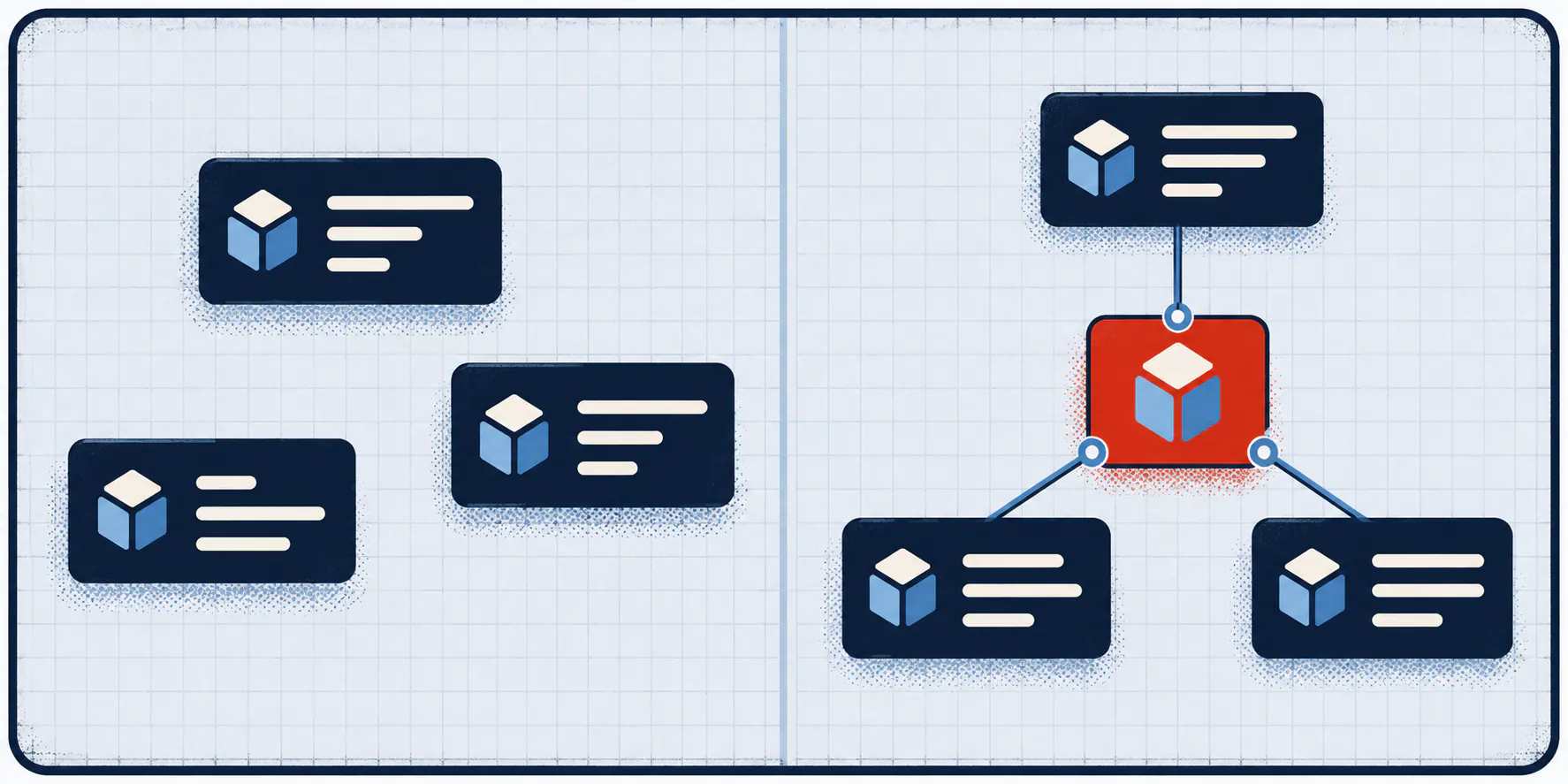
When we audit structured data, the problem is rarely that there’s none. It’s that there are many disconnected pieces. A plugin adds one Organization block, the theme adds another with a slightly different name, a review widget adds a third, and none of them reference each other. To a machine, that can look like three different organizations. We check specifically for orphaned IDs, broken reference chains, mismatches with canonical URLs, and more than one competing definition of the same organization.
The second failure is mismatch between markup and page. If your schema claims credentials, ratings, or prices that aren’t visible on the page, you’re asking machines to trust labels your content doesn’t back up. Keep the markup a faithful restatement of what the page actually says, nothing more.
Where to start
Hand your developers a short brief: define the organization once with a stable ID, connect your people, services, and locations to it, mark up authors on your articles, and validate that everything resolves into one graph. Then check that every claim in the markup matches the visible page. That’s a few days of focused work for most sites, not a quarter-long project.
Structured data lives inside Technical SEO & AI Crawl Readiness, because it only helps once crawlers can reach and render the page in the first place; we covered that foundation in Technical SEO in 2026. It pairs naturally with the answer-first content work in Answer Engine Optimization, since clean markup on a page nobody would quote still doesn’t get quoted. If you’d rather know exactly where your graph breaks before anyone writes a line of code, Schema & Structured Data is one of the eight categories our AI Readiness Audit scores.
Frequently asked questions
Does schema markup improve rankings?
Not directly. Google describes structured data as a way to help its systems understand content and to qualify for certain search features, not as a ranking boost. Its value is clarity: making your entities and relationships unambiguous to every system that reads them.
Do AI engines like ChatGPT actually use schema?
It varies by system, and most don't fully disclose how much they rely on it. Some retrieval pipelines read structured data; others work mainly from visible text. That's why schema should reinforce clear content, not replace it.
Which schema types should we implement first?
Start with Organization, then connect Service or Product, Person for your experts, Article for authored content, and LocalBusiness if you have locations. Define the organization once and have everything else reference it.
We already have schema from a plugin. Are we covered?
Possibly not. Plugins often add fragments that don't connect to each other, or duplicate definitions of your organization. Validate that your markup resolves into one connected graph and matches what's visible on each page.
Brian Winum writes about GEO, AEO, technical SEO, entity authority, and AI-search visibility for MAXPlaces Marketing.