A Practical Guide to Local SEO for Multi-Location Brands
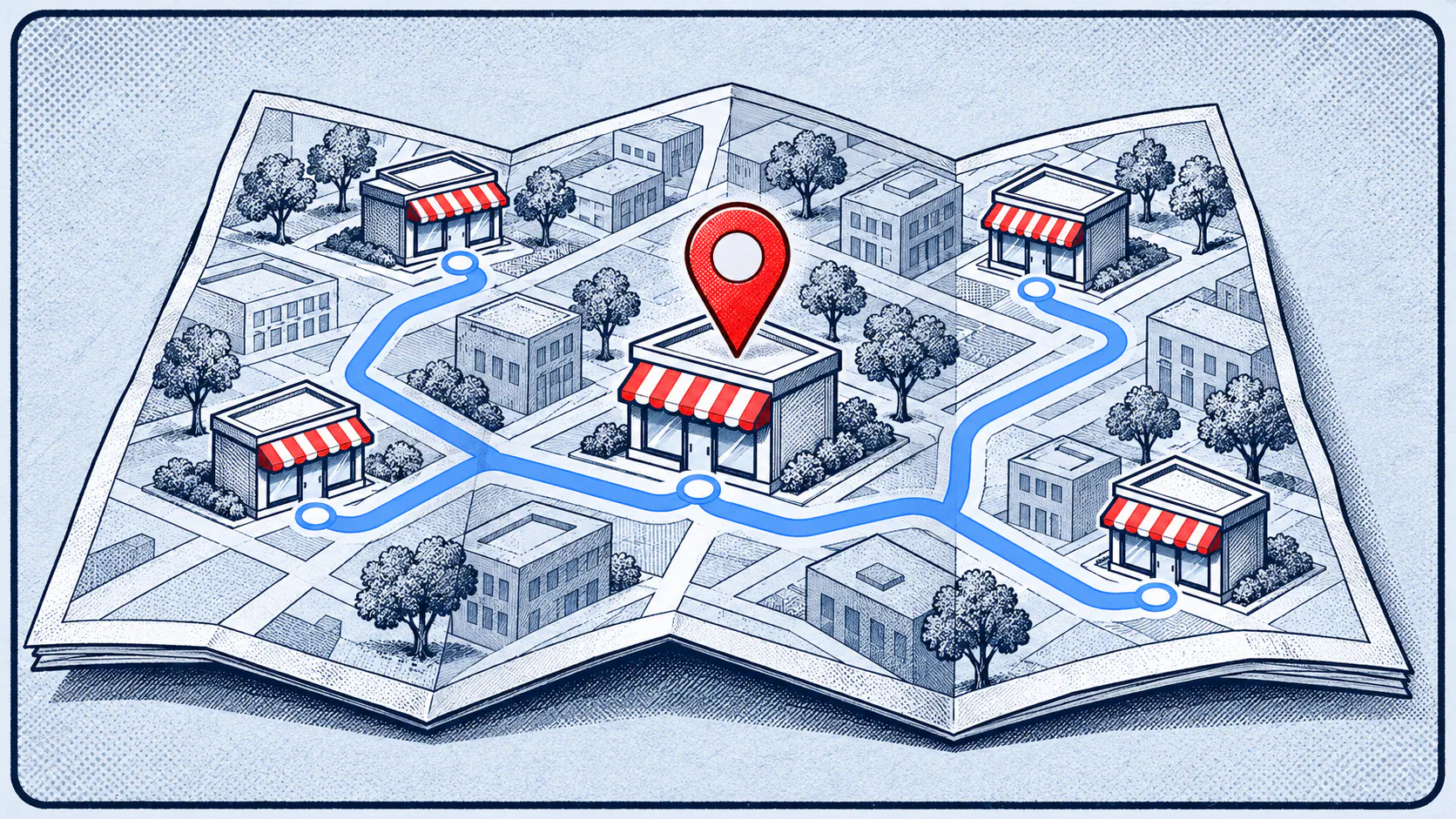
How multi-location brands can keep business data consistent, manage Google Business Profiles, and build useful pages for every location.
The first time I audited a 30-location client, I found their flagship clinic listed under four different phone numbers across the web, two of which rang a location that had closed eighteen months earlier. Nobody had done anything wrong, exactly. A location manager had updated one profile, an agency before us had built directory listings from an old spreadsheet, and a franchise portal had its own copy of everything. Thirty locations, a dozen platforms each, and no single source of truth.
That’s the real problem with local SEO at scale. Each individual task is simple. Keeping hundreds of them accurate and consistent at once is not. If you run operations or marketing across many markets, this guide covers the three things that decide local visibility for a multi-location brand, how to manage them without drowning, and why consistency now matters to AI assistants as much as to Google Maps.
Why multi-location local SEO is its own discipline
A single-location business can manage local search with one profile, one page, and a good habit of asking for reviews. At ten locations, that becomes ten profiles, ten pages, and ten review streams. At a hundred, it’s an operations problem: who owns each location’s data, how changes propagate, and how you notice when something drifts.
The stakes are real because local intent converts. Someone searching for a service “near me,” or opening the map to compare options, is usually close to choosing. Whether your nearest location appears in the local pack, with correct hours and a working number, decides whether you’re in that choice at all.
System 1: one source of truth for every location
Everything starts with NAP consistency: the business name, address, and phone number for each location, matching exactly everywhere it appears. In practice, I’d extend that to hours, primary category, website URL, and the services each location offers. Search engines cross-check these details across your site, your profiles, directories, and data aggregators. When they agree, your locations look established and trustworthy. When they conflict, engines have to guess which version is right, and they don’t always guess in your favor.
The fix is organizational before it’s technical. Keep one master record per location, in a spreadsheet, a location-management platform, or your own database, and treat it as the only place changes are made. Everything else, from your website to Google Business Profile to directory listings, gets updated from that master. Assign a named owner for each location’s data, and give local managers a defined way to request changes instead of editing profiles directly.
This matters more now than it did a few years ago. An AI assistant answering “which urgent care near me is open now?” may use business listings, websites, or other sources, depending on the system and query. A brand whose details disagree across sources is harder for them to describe confidently, and easier to confuse with someone else. Consistency is how a location becomes a clear, recognizable entity rather than a set of loosely matching records.
“At thirty locations, local SEO isn’t thirty small tasks. It’s one data-governance problem wearing thirty different addresses.”
System 2: Google Business Profiles managed at scale
Each location should have its own verified Google Business Profile, with an accurate primary category, complete services, current hours (including holiday hours, the most commonly missed update), real photos of that location, and a link to its own location page rather than your homepage. Google offers bulk management for organizations with many locations, which lets you control profiles centrally while still granting local managers access where it makes sense.
The two failure modes I see most at scale are neglect and over-control. Neglected profiles drift: old photos, missed holiday hours, unanswered questions, and suggested edits from the public that quietly change your details. Over-controlled profiles go stale in a different way, because nobody at headquarters knows the parking changed or a service was added. The workable middle is central ownership of the core data with a simple, fast channel for local teams to flag what’s changed.
System 3: location pages that earn their place
Every location needs a local landing page on your site. That’s where its profile points, it’s what search engines use to confirm the location’s details, and it’s what a nearby buyer reads before calling. The mistake that sinks multi-location brands is the templated page: identical copy with only the city name swapped. Those pages give search engines and readers nothing distinctive, and at scale they read as thin, near-duplicate content.
A strong location page includes the location’s exact details, hours, and a map; the services offered at that specific location; the people who work there; directions and parking notes; local reviews; and something genuinely local, like the neighborhoods served or what makes that site different. Keep a clean, predictable URL structure, such as /locations/city-name/, and link every location from a crawlable location directory, not just a search-box store finder that crawlers can’t use.
Each page should also carry structured data describing that specific location and connecting it to the parent brand:
{
  "@context": "https://schema.org",
  "@type": "MedicalClinic",
  "@id": "https://www.example.com/locations/hartford/#location",
  "name": "Example Urgent Care – Hartford",
  "parentOrganization": { "@id": "https://www.example.com/#org" },
  "address": {
    "@type": "PostalAddress",
    "streetAddress": "100 Main St",
    "addressLocality": "Hartford",
    "addressRegion": "CT",
    "postalCode": "06103"
  },
  "telephone": "+1-860-555-0100",
  "url": "https://www.example.com/locations/hartford/"
}
That markup is a form of LocalBusiness schema. It won’t rank a page by itself, but it removes ambiguity about which location is which, and which brand they all belong to. We explain how connected markup works in Structured Data for AI: The Schema That Helps Machines Understand Your Content.
Our AI Visibility Report shows exactly which pages are indexed and your site's exact authority metrics.
Where reviews fit in
Reviews and local visibility reinforce each other. Google says more reviews and positive ratings can help local ranking. Recent reviews and thoughtful replies can help a buyer compare nearby options, but Google does not identify recency or replies as direct ranking factors in its published guidance. At scale, the challenge is consistency again: some locations generate reviews naturally while others go quiet, and responses vary from thoughtful to nonexistent. That’s why we treat Reputation & Trust Signals as part of the same local plan rather than a separate project.
Where to start
Pick five representative locations and audit them by hand: search for each by name, check its profile, its location page, and its listings on the major directories, and note every detail that doesn’t match. The pattern you find across five will tell you what’s broken across all of them. Then set up the master record and its owners before fixing individual listings, or the fixes will drift again.
This is the core of our Local & Geo-Targeted SEO work: building the system, not just cleaning up listings once, sequenced within our S.T.A.R.SM framework so data, technical fixes, and reputation land in the right order. And because the same consistent, well-structured location data can help AI assistants distinguish your locations and describe them accurately, it pairs naturally with Generative Engine Optimization for brands that want to show up when buyers ask an assistant instead of opening a map.
Frequently asked questions
What is NAP consistency, and why does it matter for multi-location brands?
NAP stands for name, address, and phone number. Conflicting details across your site, profiles, and directories can make it harder for search engines and AI assistants to identify the right location details. With many locations, inconsistencies multiply quickly unless one master record controls every update.
Does every location need its own page?
Yes. Each location should have a dedicated page with its own details, services, team, and local information, linked from its Google Business Profile. Templated pages that only swap the city name tend to be treated as thin, near-duplicate content.
Should local managers control their own Google Business Profiles?
Usually not entirely. Central ownership of core data such as name, address, phone, hours, and categories prevents drift, while local managers should have a fast, defined way to flag changes and contribute photos or updates.
How do AI assistants use local business data?
Sources vary by assistant and query. An assistant may draw from your site, business profiles, directories, or other providers. Consistent, accurate information reduces ambiguity about a location, but it does not guarantee a correct answer or recommendation.
Brian Winum writes about GEO, AEO, technical SEO, entity authority, and AI-search visibility for MAXPlaces Marketing.